
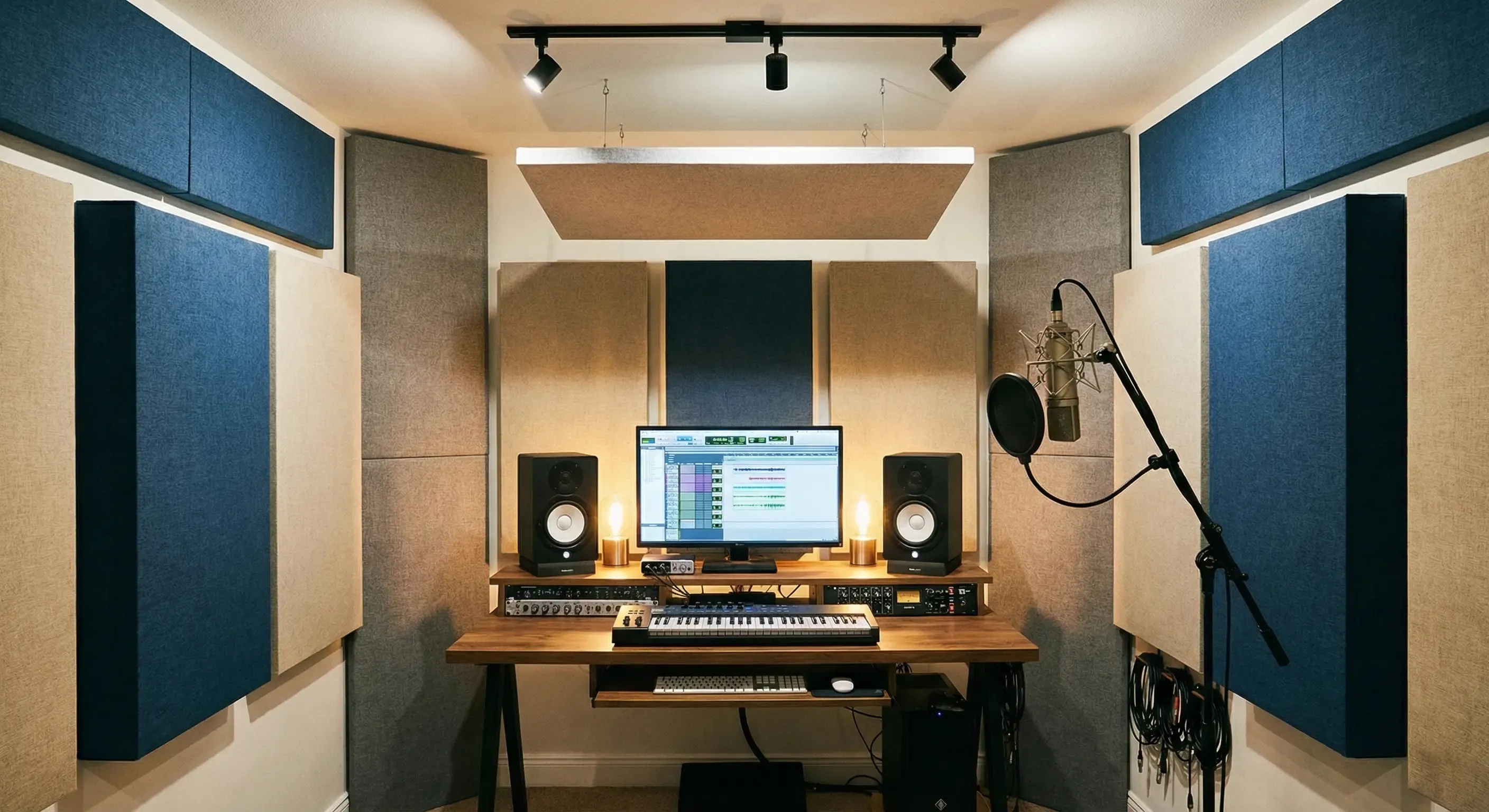
Building a recording studio involves more than purchasing microphones, monitors, and software. One of the most important factors that determines sound quality is how the room handles sound. Many musicians and producers struggle with issues such as echo, uneven bass, or unwanted noise entering their recordings.
Understanding the difference between acoustic treatment and soundproofing helps musicians create studios that produce clear recordings and accurate mixes.
Understanding Studio Sound Problems
Before deciding whether your studio needs acoustic treatment or soundproofing, it is important to understand how sound behaves in a room. Most home studios are built in spaces that were never designed for recording or mixing music. As a result, sound waves interact with walls, ceilings, and floors in ways that affect audio clarity.
Why Room Acoustics Affect Recording and Mixing
Every room has its own acoustic character. When sound is produced in a room, it travels outward and reflects off nearby surfaces. These reflections combine with the original sound and can either enhance or distort what you hear.
In untreated rooms, reflections often cause comb filtering, echo, and uneven frequency response. Low frequencies can build up in corners, creating inaccurate bass levels. High frequencies may bounce around the room, causing harsh or distracting echoes.
These acoustic issues make it difficult for musicians and producers to make accurate mixing decisions. A track may sound balanced in the studio but completely different when played on other speakers or headphones.
Common Sound Issues in Home Studios
Home studios often face several acoustic challenges because of their size and construction. Most residential rooms contain hard surfaces such as drywall, glass, and wood flooring that reflect sound strongly.
One common issue is flutter echo, which occurs when sound rapidly reflects between parallel walls. This creates a ringing effect that can be heard during recordings or playback.
Another frequent problem is bass buildup. Low frequencies tend to collect in room corners, making bass instruments sound louder or muddier than they actually are. These acoustic imbalances can lead to mixes that lack clarity and consistency.
What Is Acoustic Treatment?
Acoustic treatment focuses on improving how sound behaves inside a room. Instead of blocking sound from entering or leaving, acoustic treatment controls reflections and balances frequencies within the space.
By managing reflections and reducing unwanted resonances, acoustic treatment helps create a listening environment where recordings and mixes sound accurate.
How Acoustic Treatment Works
Acoustic treatment works by absorbing, diffusing, or controlling sound reflections within a room. Special materials are placed on walls, ceilings, and corners to reduce the amount of sound bouncing around the space.
Absorptive materials reduce reflections by capturing sound energy. Diffusive surfaces scatter sound waves so they spread evenly throughout the room. Together, these elements help maintain clarity and balance across different frequencies.
When a room is properly treated, the direct sound from speakers or instruments becomes easier to hear without interference from excessive reflections.
Types of Acoustic Treatment Materials
Several materials are commonly used to treat studio acoustics. Acoustic panels are among the most popular solutions. These panels absorb mid and high frequency reflections and are typically placed at reflection points on the walls.
Bass traps are designed specifically to control low frequency buildup. They are usually installed in corners where bass energy accumulates.
Diffusers are another treatment option. Instead of absorbing sound, diffusers scatter sound waves to prevent harsh reflections while maintaining a natural sense of space.
Where Acoustic Treatment Should Be Placed
Placement plays a crucial role in the effectiveness of acoustic treatment. Panels are often installed at early reflection points, which are locations where sound first reflects off walls before reaching the listener.
Ceiling treatment, often called a ceiling cloud, helps reduce reflections above the listening position. Bass traps are commonly installed in corners to control low frequency energy.
When treatment is placed correctly, it helps create a balanced listening environment that improves both recording and mixing accuracy.
What Is Soundproofing?
Soundproofing focuses on preventing sound from entering or leaving a room. Unlike acoustic treatment, which improves internal sound quality, soundproofing addresses noise isolation.
This process is especially important in environments where outside noise may interfere with recording or where loud music might disturb neighbors.
How Soundproofing Works
Soundproofing works by adding mass and structural isolation to walls, ceilings, and floors. Heavy materials block sound transmission, while structural separation prevents vibrations from traveling through building structures.
For example, double wall construction or resilient channels can reduce the transfer of sound vibrations between rooms. Sealing gaps around doors and windows also helps limit sound leakage.
However, complete soundproofing requires significant construction changes and can be expensive.
Common Soundproofing Materials
Soundproofing often relies on dense materials that block sound energy. Materials such as mass loaded vinyl, double drywall layers, and acoustic sealants are frequently used in studio construction.
Solid core doors and specialized window inserts can also help reduce sound leakage. These materials increase the overall mass of the structure, which makes it more difficult for sound waves to pass through.
Why Complete Soundproofing Is Difficult in Home Studios
Achieving complete soundproofing in a home studio is extremely challenging. Sound travels through air as well as through structural elements like walls, floors, and ceilings.
Even small gaps around doors or electrical outlets can allow sound to escape. Proper soundproofing often requires structural changes such as isolated walls or floating floors, which can be costly and complex.
Because of these challenges, many home studios focus on reducing noise rather than achieving total sound isolation.
Key Differences Between Acoustic Treatment and Soundproofing
Although the two concepts are often mentioned together, acoustic treatment and soundproofing address different aspects of studio design.
Feature | Acoustic Treatment | Soundproofing |
|---|---|---|
Main Purpose | Improve sound quality inside the room | Prevent sound from entering or leaving |
Focus | Control reflections and frequencies | Block sound transmission |
Typical Materials | Acoustic panels, bass traps, diffusers | Mass loaded vinyl, double drywall, sealants |
Cost | Moderate and easier to install | Often expensive and requires construction |
Impact on Recording | Improves clarity and mix accuracy | Reduces external noise interference |
Understanding these differences helps studio owners prioritize the right solutions for their space.

Can You Use Both Acoustic Treatment and Soundproofing?
In many cases, studios benefit from a combination of both approaches. Acoustic treatment ensures accurate sound inside the room, while soundproofing helps control noise entering or leaving the space.
Professional studios often incorporate both strategies during the design process. However, home studios typically prioritize acoustic treatment because it directly improves recording and mixing quality.
Tips for Improving Studio Sound on a Budget
Improving studio acoustics does not always require expensive construction. Small adjustments can make a noticeable difference in sound quality.
Start by placing acoustic panels at early reflection points and adding bass traps in corners. Thick curtains, rugs, and bookshelves can also help reduce reflections in untreated rooms.
Careful speaker placement and monitoring position adjustments can further improve how sound behaves in the studio.
Conclusion
Acoustic treatment and soundproofing serve different roles in studio design. Acoustic treatment focuses on improving sound quality within the room by controlling reflections and balancing frequencies. Soundproofing prevents sound from entering or leaving the space, protecting recordings from external noise.
By understanding these differences, musicians and producers can design studios that deliver clearer recordings, better mixes, and more reliable listening environments.