
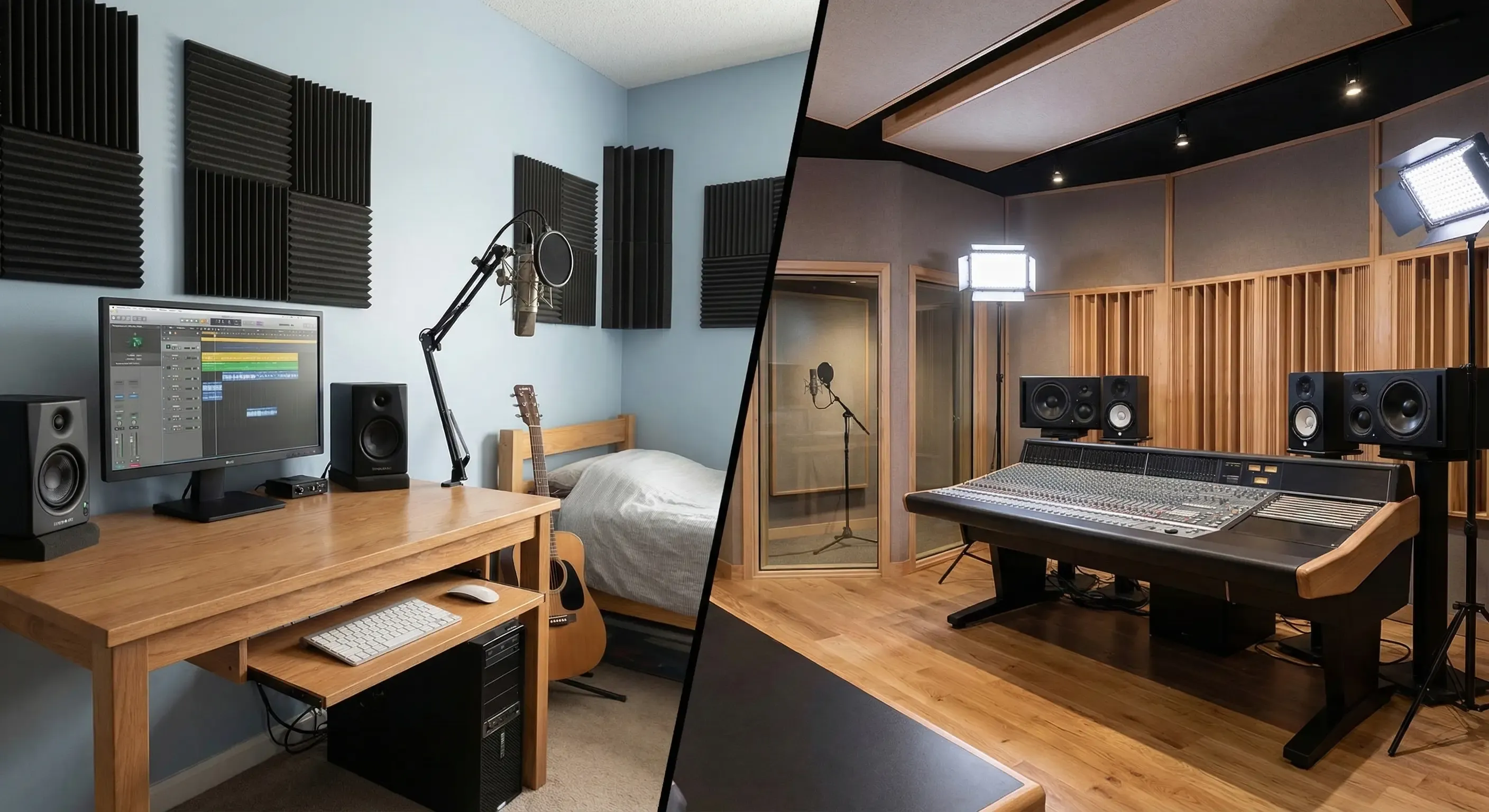
The way musicians create and record music has evolved significantly over the past decade. Affordable recording equipment and powerful music software have made it possible for artists to produce music from home. At the same time, professional recording studios continue to provide high level acoustic environments and advanced equipment that many musicians rely on.
Understanding the differences between home studios and professional studios helps musicians choose the right environment for recording, mixing, and producing music.
What Is a Home Recording Studio?
A home recording studio is a music production setup created inside a house, apartment, or personal workspace. These studios can vary widely in size and complexity. Some are simple bedroom setups, while others are professionally designed rooms with acoustic treatment and advanced equipment.
Home studios allow musicians to work independently and produce music without renting studio time. With the right tools and proper acoustic control, artists can record vocals, instruments, and podcasts from their own homes.
Typical Equipment in a Home Studio
Most home studios include several essential components that support recording and music production. While the quality of equipment may vary, the core setup is often similar across many home studios.
• Computer with a Digital Audio Workstation (DAW)• Audio interface for recording and playback• Studio monitors or headphones for accurate listening• Microphones for recording vocals and instruments• Basic acoustic treatment such as panels or bass traps
These tools allow musicians to record, edit, and mix audio without leaving their workspace.
Common Limitations of Home Studios
Despite their flexibility, home studios often face several challenges related to space and acoustics. Rooms in homes are rarely designed for audio production, which can affect sound quality.
One common issue is room reflections. Hard surfaces such as walls, ceilings, and floors cause sound waves to bounce around the room. These reflections can make recordings and mixes sound unclear or unbalanced.
Another limitation is noise control. Household noise, traffic, and nearby activities can interfere with recording sessions. Without proper sound isolation, background noise can affect audio quality.
What Is a Professional Recording Studio?
A professional recording studio is a purpose built facility designed specifically for music production. These studios are carefully engineered to control sound reflections, minimize noise, and create accurate monitoring environments.
Professional studios typically include multiple rooms designed for different tasks. These spaces allow musicians and engineers to record, mix, and produce music in a controlled environment.
Because of their advanced design and equipment, professional studios are widely used for commercial music production, film sound recording, and large musical projects.
Specialized Recording Rooms
Professional studios are often divided into separate areas that serve different roles during the recording process.
The control room is where producers and engineers monitor and mix the audio. This room is acoustically treated to provide accurate sound reproduction.
The live room is designed for recording instruments such as drums, guitars, or full bands. These rooms are usually larger and carefully shaped to produce natural sound reflections.
Many studios also include isolation booths. These small rooms are used for recording vocals or individual instruments without capturing unwanted sound from other sources.
Advanced Equipment and Engineering Support
Professional recording studios typically feature high end equipment that is difficult for individual musicians to purchase.
This equipment may include premium microphones, analog mixing consoles, studio grade preamps, and specialized outboard processors. These tools allow engineers to capture and shape sound with exceptional precision.
In addition to equipment, professional studios provide experienced engineers who guide the recording process. Their knowledge of microphone placement, signal routing, and mixing techniques can significantly improve the final sound of a project.
Key Differences Between Home Studios and Professional Studios
Although both environments support music production, they differ in several important ways. The following comparison highlights the main differences between home studios and professional recording studios.
Feature | Home Studio | Professional Studio |
|---|---|---|
Location | Personal home or workspace | Dedicated recording facility |
Acoustic Design | Basic or partially treated rooms | Fully engineered acoustic environment |
Equipment | Entry level to semi professional gear | High end studio equipment |
Recording Space | Usually one room | Multiple recording rooms and booths |
Technical Support | Self operated | Professional engineers available |
Cost | Lower long term cost | Higher hourly or daily studio rates |
These differences affect both the recording experience and the quality of the final audio.
Advantages of a Home Recording Studio
Home studios have become extremely popular because they provide musicians with flexibility and creative independence. Artists can work on their music at any time without scheduling studio sessions or paying hourly fees.
Creative Freedom and Flexible Workflow
One of the biggest benefits of a home studio is the freedom to experiment. Musicians can spend hours writing, recording, and refining their music without time pressure.
This environment encourages creativity and allows artists to test ideas without worrying about studio rental costs. Many producers prefer this workflow because it supports continuous experimentation.
Long Term Cost Savings
Although building a home studio requires an initial investment, it can save money over time. Renting professional studios frequently can become expensive, especially for artists who record regularly.
Once a home studio is set up, musicians can produce music for years without paying hourly recording fees.

Advantages of a Professional Recording Studio
Professional studios continue to play an important role in music production because they provide environments that are difficult to replicate at home.
Superior Acoustic Design
Professional recording studios are designed by acoustic engineers who carefully control how sound behaves within the space. This design reduces unwanted reflections and ensures accurate monitoring.
Because of this precision, engineers and producers can make reliable mixing decisions. What they hear in the studio closely matches how the music will sound on other systems.
Access to Professional Equipment and Engineers
Another major advantage of professional studios is access to specialized equipment and experienced engineers.
High end microphones, analog compressors, and studio consoles provide sound quality that many home studios cannot achieve. Engineers also understand how to capture performances effectively, improving recording quality and efficiency.

When a Home Studio Is the Right Choice
For many musicians, a home studio is the most practical option. Artists who produce music regularly benefit from the flexibility and independence that home studios provide.
Home studios work well for solo musicians, producers, podcasters, and content creators. These setups allow artists to record vocals, instruments, and demos without leaving their homes.
They are especially useful for songwriting, music production, and online content creation where frequent recording sessions are needed.
When a Professional Studio Is the Better Option
Professional studios are often the better choice for projects that require larger recording spaces or advanced technical support.
Recording live bands, orchestras, or drum kits usually requires larger rooms with controlled acoustics. Professional studios also provide high quality microphones and experienced engineers who help capture performances effectively.
Artists producing commercial releases or working with record labels often choose professional studios to ensure the highest possible recording quality.
Hybrid Workflows: Combining Home and Professional Studios
Many musicians today use a hybrid production workflow. This approach combines the convenience of a home studio with the technical advantages of professional recording facilities.
Artists may record demos, vocals, or initial tracks at home. Later, they might visit a professional studio to record drums, mix the final tracks, or complete mastering.
This method allows musicians to maintain creative control while still benefiting from professional studio resources when needed.
Choosing the Right Studio Environment for Your Music
Choosing between a home studio and a professional recording studio depends on several factors including budget, recording needs, and production goals.
Musicians who value flexibility and independent production often prefer home studios. Meanwhile, artists working on large or commercial projects may benefit more from professional recording environments.
Both studio types play important roles in modern music production. Many successful musicians use a combination of both environments to achieve high quality results while maintaining creative freedom.
Conclusion
Home studios and professional recording studios each offer unique advantages for musicians. Home studios provide convenience, flexibility, and long term cost savings, making them ideal for independent artists and producers.
Professional studios offer advanced acoustic design, specialized equipment, and experienced engineers who help create polished recordings. These environments are especially useful for complex projects and large recording sessions.
By understanding the strengths of each option, musicians can choose the studio environment that best supports their creativity and production goals.